

Marketing · Pricing
Pricing psychology and customer decisions: why a low price often reduces sales

Most companies think their problem is marketing. That they need more advertising, better SEO or more followers. In reality, a huge number of companies lose money before a customer even clicks on an ad. The problem is pricing.
Not because their prices are high. But because they charge less than the value they actually create. And worse: with their own words they persuade customers to compare them on price alone.

95% of purchase decisions are made emotionally, not rationally
5x difference in price for the same service when value is communicated well
1 change in how value is communicated can double the perceived price without changing the product
The biggest business myth: "If I raise my price, I'll lose customers"
We hear this sentence again and again. But research in behavioural economics shows something different. People don't decide purely logically. Price is not an objective value. It is a psychological signal.
When customers see a price, they don't ask: "How much does it cost?" Subconsciously they ask a different question: "Is it worth it to me?" That is a huge difference.
That is why two companies can sell practically the same service for €1,000 and €5,000. And both can have clients. Perceived value decides, not the price itself.
The situation
A customer is looking for an accountant and finds two firms. The first charges €35 an hour. The second, €85 an hour. The second firm's website looks more professional. The customer chooses the second, although they have no idea whether it is really better.
What happens in the mind
The brain automatically maps: higher price = higher quality. This is not logic. It is an evolutionary shortcut. Paradoxically, a low price increases perceived risk, not attractiveness.
Raising your price can increase customer trust if it comes with better communication of value.
The situation
A designer offers one package for €2,400. The customer hesitates. The designer adds a premium package for €5,800. Suddenly €2,400 looks like a sensible choice.
What happens in the mind
The first number a customer sees sets their reference point. They compare every other number with it. That is why a premium package nobody buys sells the middle package.
Never start a price list with the cheapest option. An anchor at the top makes the middle price attractive.
The situation
A company is considering investing €4,000 in a new website. Instead of emphasising the gain, we tell them: "Without a working website you are losing an estimated 8 new customers a month."
What happens in the mind
The fear of loss is 2x stronger than the joy of gain. The customer isn't buying a product; they are buying the certainty of not making a bad decision and avoiding a loss.
Communicate what the customer loses without your service, not just what they gain with it.
The situation
Two companies sell the same coaching for €800. One has a website made of text and prices. The other has client stories, photos, video and a precise description of the process. The second gets 3x more enquiries.
What happens in the mind
Value is created in the customer's mind before the purchase. The website, branding, communication and reviews shape perceived value before the customer sees the price. The same price, a different perception, a different result.
Investing in presentation increases perceived value without changing the product or the price.
People don't buy services. They buy an outcome, a feeling and a transformation.
This is the moment that changes how you think about selling. Nobody buys a website. Nobody buys SEO. Nobody buys a logo.
They buy an outcome. They buy a feeling. They buy a transformation. They buy the solution to a problem.
When you sell a website as a technical product, the customer compares prices. When you sell an outcome, the customer compares value. This is where the difference arises between companies that fight for every euro and companies that can charge many times more.
The customer buys
Not the product
But the transformation
A website
Not HTML code and design
More customers, trust, a better position
A logo and branding
Not graphics and a font
Professionalism, recognition, authority
SEO
Not technical tweaks
Customers looking for exactly what you sell
Legal advice
Not clauses and contracts
Peace of mind that everything is in order
A renovation
Not labour and materials
A finished result, without stress or surprises
Feature → benefit → outcome: why customers pay for results, not work
This is one of the most practical changes any company can make in its communication. And it doesn't require a new website, a new logo or a bigger budget. Just a different way of thinking.
Most companies present features: what they do. But customers buy the outcome: what will change in their life or business. The benefit is just the bridge between them.
Feature
What it is. A technical description. What the company does.
Benefit
What the customer gains. The advantage over the alternative.
Outcome
How the customer's business or life changes. This is what they pay for.
Feature
Benefit
Outcome: what they pay for
SEO
Better search visibility
More relevant enquiries and higher turnover without paid ads
Responsive web design
The website works on mobile
The 60% of customers who visit you on mobile don't leave
Copywriting and UX copy
Clear, persuasive website copy
The customer understands the value and contacts you instead of a competitor
Logo and visual identity
A consistent, professional look
Customers remember you, trust you and recommend you
Website loading speed
The website loads within 2 seconds
You don't lose the 40% of visitors who leave when a page loads slowly
Why two customers pay completely different prices for the same service
This is the foundation of value-based pricing, and most companies ignore it completely. Price is not a property of the product. It is a function of the value the customer perceives.
One client buys a website for €1,500. Another for €8,000. Not because the website is different. But because the outcome has a different value for them.
Example: how to calculate the real value of a website for a client
50 new customers a year from the website
×
€1,000 average customer value
=
€50,000 annual value of the website for the client
If the website generates €50,000 a year for the client, a price of €5,000 represents just 10% of the value created. A customer who sees it this way doesn't ask for a discount. They ask when you can start.
That is why the question "How much should I charge?" is the wrong question. The right question is: "What value does my product create for this particular customer?" Then set the price as a fraction of that value.
Why customers only compare prices: the problem isn't them
Many business owners think: "Clients only care about price." In most cases that isn't true. Clients care about price when they can't see a difference.
If they receive three quotes, "Website, €2,000", "Website, €3,000" and "Website, €5,000", how are they supposed to know why one is more expensive? They can't. So they compare prices. Not because they are cheap, but because the companies failed to explain the value.
A quote that triggers price comparison
The customer sees only numbers
Logo €400
Website €2,000
SEO €500
The customer doesn't know what they will get, so they compare with cheaper competitors.
A quote that sells the outcome
The customer sees value
Visual identity €400
Logo + colours + typography that build customer trust at first sight
A website that sells €2,000
A site designed so that visitors understand your value and contact you
Search visibility €500
Customers looking for what you sell find you before your competitors
The customer understands the value. The price becomes secondary.
Empathy map: what customers are really dealing with when they ask about price
The question "How much does it cost?" usually doesn't mean what we think. Behind it lie other worries, and those are what your communication needs to answer.
What the customer feels
- Uncertainty about making the right decision
- Fear of paying and not getting a result
- Pressure from comparing several quotes at once
- Doubt: why such a big difference in prices?
What the customer is really looking for
- Certainty that they will get a result
- Proof that it works with you
- A reason why you and not someone cheaper
- The feeling that they are making the right decision
What the customer does
- Compares prices when they can't see a difference in value
- Reads reviews and case studies
- Asks for a discount when they don't feel certain
- Goes to a cheaper company without explanation
What the customer fears
- Paying more and getting less than elsewhere
- Regretting the decision after delivery
- Being misled by unrealistic promises
- Wasting time with an unreliable company
Want to know whether your offer communicates value or just price? A free analysis of your communication and pricing within 24 hours.
Customers don't buy a price. They buy certainty, an outcome, trust and the feeling that they made the right decision.
Why an hourly rate kills company growth
This is one of the most destructive pricing models companies still use. On the surface it looks fair. In reality it penalises quality and experience.
The paradox of the hourly rate: the better you are, the less you earn.
Charging for time
Hourly rate €80
- A beginner builds a website in 40 hours = €3,200
- An expert builds a website in 10 hours = €800
- The expert earns 4x less for a better result
- The customer pays for time, not the outcome
- Every efficiency gain reduces income
- Experience isn't reflected in the price
Charging for value
Price based on the outcome
- A website for €5,000 regardless of delivery time
- The expert builds it in 10 hours = effectively €500 an hour
- The customer pays for the outcome, not the hours
- Every efficiency gain increases profit
- Experience and speed are reflected in value
- The company grows without a linear increase in work
Value-based pricing means: set the price according to the value of the outcome for the customer, not according to your costs or time spent. This is a fundamental change that lets a company grow without a proportional increase in work.
Why discounts don't work: a price war nobody wins
Many companies respond to weak sales with a discount. That is often very dangerous. Customers quickly get used to it, start waiting for the next promotion and stop perceiving the product's real value.
Worst of all, nobody usually wins a price war. Someone will always be cheaper. That is why luxury brands don't cut prices. That is why Apple doesn't compete on the lowest price. That is why expensive restaurants don't offer permanent discounts. Price communicates. Price creates expectations. Price builds brand positioning.
An example from practice: a photography studio
They stopped giving discounts. They stopped losing clients.
A photographer offered corporate shoots with a permanent 20% discount "for new clients". Customers got used to the discount. When she dropped it, they asked: "Why no discount now?" Perceived value fell.
What she changed: she dropped discounts entirely. Instead she introduced a "value package": shoot + editing + online gallery + a licence for business use. A higher price, but the customer saw more items, which meant more perceived value.
She also added case studies with real companies and results to her website. Customers stopped asking for discounts. They started asking about dates.
+45% increase in average order value after dropping discounts
0 discount requests after introducing the value package
3x more enquiries from the website after adding case studies

How to create price packages: why most customers choose the middle one
One price means the customer compares you with competitors. Three prices mean the customer compares your packages with each other. This is a fundamental difference in the psychology of decision-making.
People naturally avoid extremes. The cheapest package seems insufficient. The most expensive seems too much. The middle package seems sensible, and that is exactly why most customers choose it.
Basic
€1,800
one-off
- One-page website
- Responsive design
- Basic SEO
- Contact form
- 1 round of revisions
Suitable for sole traders and small local businesses.
Most popular
Professional
€3,400
one-off
- Multi-page website
- UX copywriting
- Advanced SEO + schema
- Google Analytics setup
- 3 rounds of revisions
- One month of technical support
For growing companies that want a website that sells.
Premium
€6,200
one-off
- A complete web system
- Branding and visual identity
- Advanced UX research
- A/B testing
- Unlimited revisions
- 3 months of support and optimisation
For companies where every enquiry has high value.
Why "Most popular" works: the customer didn't choose €3,400 as a price. They chose the middle option as the psychologically "sensible" decision. Anchoring with the top package (€6,200) made the middle package attractive.
Anchoring: why the first number a customer sees changes everything
Anchoring is one of the strongest effects in behavioural economics. The first number a customer sees sets their reference point, and they compare every other number with it.
Without anchoring €5,000
The customer sees only one price. They have no reference point. They compare with competitors. It seems expensive.
"Why so much? I've seen it cheaper elsewhere."
With anchoring €8,500 €5,000
The customer sees €8,500 as the reference point. €5,000 looks like a good deal. The same price, a different perception.
"For this kind of value, €5,000 is a reasonable price."
Anchoring works even without a crossed-out price. A premium package in your price list serves as an anchor: even if nobody buys it, it makes the middle package attractive. Never start a price list with the cheapest option. Always start with the most expensive.
Segmentation: why trying to be affordable for everyone doesn't pay
Many companies try to appeal to every customer. The result is paradoxical: they are too expensive for small clients and too cheap for large ones. They don't belong anywhere and fight for every contract.
The right positioning doesn't mean turning customers away. It means clearly saying: "This is for you if…" and defining who you are the ideal choice for.
Customer segment
What they care about
How to communicate price
Sole trader, just starting
Price, speed, simplicity
A clear fixed price, no surprises
Growing company
ROI, results, credibility
The value of the investment, case studies
Established company
Quality, exclusivity, service
Premium positioning, not price
Online store, online business
Conversions, turnover, measurable results
Results in numbers, not features
An example from practice: a B2B consultant
He stopped pricing by the hour. He started pricing by value. Turnover tripled.
The client provided strategic advice to small businesses and charged €80 an hour. Clients always asked how many hours a project would take and tried to minimise the time.
The problem: the customer paid for time, not the outcome. Every hour was a potential dispute. The client never knew what they would get for the money.
What he changed: he switched to project packages: "A 6-month growth strategy, €4,500". A clear output, a clear price, no hourly tracking. Plus an ROI calculation: "If this strategy brings you one new client a month worth €800, you will earn an extra €9,600 a year."
3x turnover growth after switching from hourly rates to value-based pricing
0 disputes about hours: the customer pays for the outcome, not time
€4,500 per project instead of an average €1,200 for hourly consultations
How to find the real value of your service: a calculation that changes how you see price
Most companies set prices from costs upwards. Successful companies do the opposite: from the value of the outcome downwards.
1
How many new customers can your result bring the client each year?
Example: a new website for a financial adviser → 10 new clients a year thanks to better SEO and conversion.
2
What is the average value of one customer for the client?
Example: one financial adviser client = €2,500 a year. 10 new clients = €25,000 a year. This is the value of the outcome.
3
For how many years will the result keep delivering value?
A good website works for 3 to 5 years. €25,000 × 3 years = €75,000 of potential value from one investment.
4
What percentage of that value is a fair price for your contribution?
If you are responsible for 20% of the growth: €75,000 × 20% = €15,000. Compare that with a price of €2,500. You are selling at 17% of the real value you create.
A real calculation: a gynaecology practice
A €5,000 website that creates €50,000 of value. Payback in 5 weeks.
The client ran a private gynaecology practice. She came feeling that a €5,000 website was expensive.
The value calculation: a new website optimised for local search = an estimated 15 new patients a month. Average annual value of a patient = €280. 15 × €280 × 12 months = €50,400 a year in new revenue.
When customers make this calculation themselves, price stops being a question. It becomes an answer.
€50,000 potential annual value from a €5,000 investment
5 weeks to pay back the investment with real patient growth
10x ROI: every euro invested comes back tenfold
How to raise prices without losing customers: 7 steps in the right order
The first mistake is raising the price and changing nothing else. Customers pay more only when they see more value. Here is the right approach:
1
Document the results you have achieved
Before and after. Numbers. Percentages. Client stories. Without proof, every claim about value is empty. With proof, the customer buys certainty, not faith.
2
Rename services as outcomes
"Logo" → "A visual identity that builds trust." "Website" → "A website that leads customers to a decision." Every name must speak of transformation, not technical output.
3
Describe the process, not just the output
The customer also pays for your time, experience and methodology. When they see everything the work involves, the price gets context. A process sells. A list of items doesn't.
4
Collect and present reviews
One specific client quote with a name and company is stronger than five paragraphs about your values. Social proof lowers the customer's perceived risk.
5
Improve your visual presentation
A professional website, consistent branding and quality photos all shape perceived value before the first contact. Customers decide emotionally, not rationally.
6
Create a premium package
The anchoring effect: when customers see the most expensive package first, the middle package seems more reasonable. Three packages sell more than one price. And most people choose the middle one.
7
Only now raise the price
When customers understand the value and see the proof, price stops being the main factor. Raising the price at this point is not a risk. It is the natural result of communicating value better.
An example from practice: a web studio of 3 people
They raised prices by 80%. Clients started coming without asking for discounts.
A small web studio sold websites for €1,200 to €2,000. They faced a decision: raise prices or not. Clients kept asking for discounts and comparing them with cheaper competitors.
What they changed before raising prices: they rewrote their website from technical descriptions into client stories. Every project had a before and after, numbers and a quote. They added a clear 5-step process. They introduced 3 packages instead of one price. And they showed only 8 projects on the site, the best ones.
The result: they raised prices to €2,200 to €3,600. In the first month after the change they received 4 enquiries, none of them asking for a discount. Customers asked about dates and the process, not the price.
+80% increase in average project value
8 projects on the website instead of 23: fewer but better = higher perceived value
4 enquiries in the first month, none of them about price
The future doesn't belong to the cheapest. It belongs to those who communicate value best.
The companies that succeed in the coming years won't compete by being cheaper. They will compete by explaining better to customers why their solution exists, what problem it solves, what change it brings and why it has greater value.
Customers don't buy a price. They buy certainty, an outcome, trust and the feeling that they made the right decision. And that is where a brand's real value is created.
7 conclusions about pricing
What separates companies that earn well from those fighting for every euro
- They sell an outcome, not technical output
- They document and present proof
- They don't communicate price; they communicate value
- They don't cut prices; they increase perceived value
- They make their processes and methodology visible
- Branding and the website shape perception before any contact
- Customers ask about dates, not discounts
Read on
Why a beautiful website is not enough: customer psychology 10 principles of a successful business Branding and a website that sells SEO 2026: how customers find you ReVisual pricing, transparently A free consultation on your company's value
Does your website sell value or just price?
We will look at your communication, offer and positioning, and find out where you are losing customers because of how you communicate value, not because of a high price. A free analysis with specific recommendations.
Article by Rebeka Ďurišová, ReVisual Studio. Share it with a business owner who thinks their problem is that their price is too high.
Frequently asked questions
Why do customers only compare prices?
Customers compare prices when they cannot see a difference in value. If a company cannot explain what the customer gets, what the result will be and why the offer differs from the competition, the customer has no option but to compare numbers.
How can I raise prices without losing customers?
Raising the price without changing how you communicate value is a mistake. The right approach: first explain the value better, show results and case studies, improve your brand positioning and the presentation of your offer. Only then raise the price. When customers understand the value, price stops being the main factor.
More insights
 1 June 2026Why do some companies grow even in a crisis? The biggest differences between growth and stagnationWhy do some companies grow during crises while others stagnate? Discover the strategies, marketing principles and decisions that separate growing companies from the rest.
 29 May 2026SEO is not dead. But it is changing more than in the last 15 years.SEO is changing. Semantic SEO, AI search, GEO and AIO shape the results on Google and ChatGPT. Find out how to prepare your website for 2026.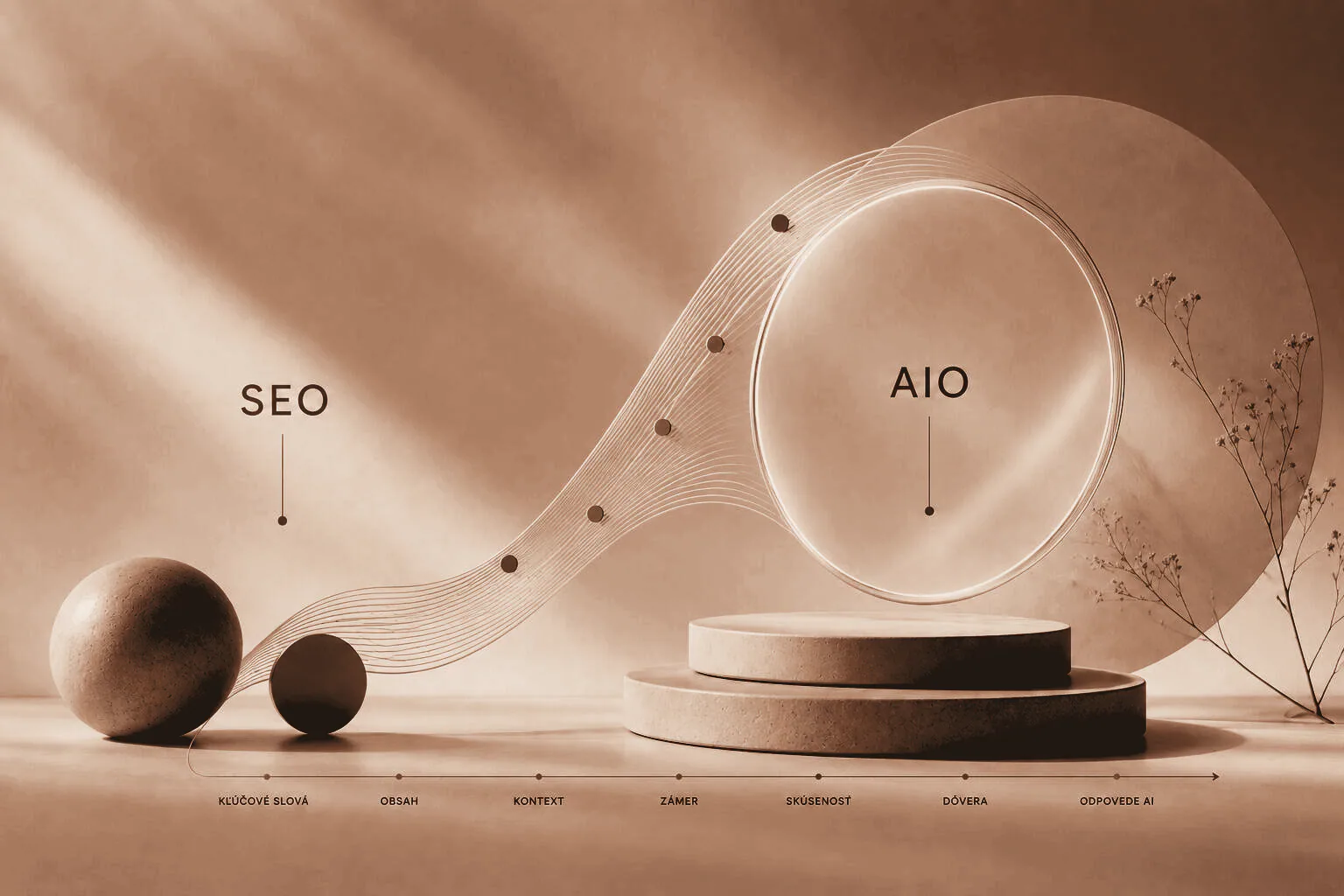
Next step
Tell us where you want to go. We will plan the route together.
The first consultation is free and without obligation. We go through your goals, and afterwards you receive a proposed solution with an indicative price.
Start my project