
Web · Marketing
From enquiry to booking: what your website can handle for you

It is Monday morning and four messages are waiting in the inbox. Two ask about prices, one about a free slot, and one contains an address that needs copying into a spreadsheet. In the afternoon the phone rings with the same question as yesterday. None of it is hard. Together, though, it takes time the business owner would rather spend on work for clients.
A well-designed website will not solve everything. It can, however, handle part of this repetitive work on its own: answer common questions, offer a free slot, ask for the details you need and send them to where someone will actually deal with them. In this article we go through concrete options and how to choose the first one that makes sense for you.
Seven things your website can handle for you
1. Booking an appointment without a phone call
If a customer knows the service and just wants to pick a time, a phone call is an unnecessary step for both sides. A booking system shows free slots, the customer chooses one and receives a confirmation. You see the booking in your calendar.
It is worth separating two situations. A link to, or an embedded form of, an external booking system (such as Bookio or Reservio) is a quick and reliable solution, but the bookings run in the provider’s system. A custom booking system only makes sense with specific rules, for example when several services, rooms or staff members have to be combined. For most businesses the first option is enough, as long as it is well integrated into the website.
2. A form that asks what matters
A generic form with a single “Message” field leads to more e-mails along the lines of “and what is your budget?”. A form can find out the type of enquiry, the deadline or the scope right away and send the enquiry to the right person. Required fields should be kept to a minimum, though. Every extra one reduces the number of enquiries sent.
On our own website this is solved with a simple choice of enquiry type. The enquiry arrives by e-mail with this information, and in analytics we see only the enquiry type, never the content of the message or personal data.
3. An indicative calculator or configurator
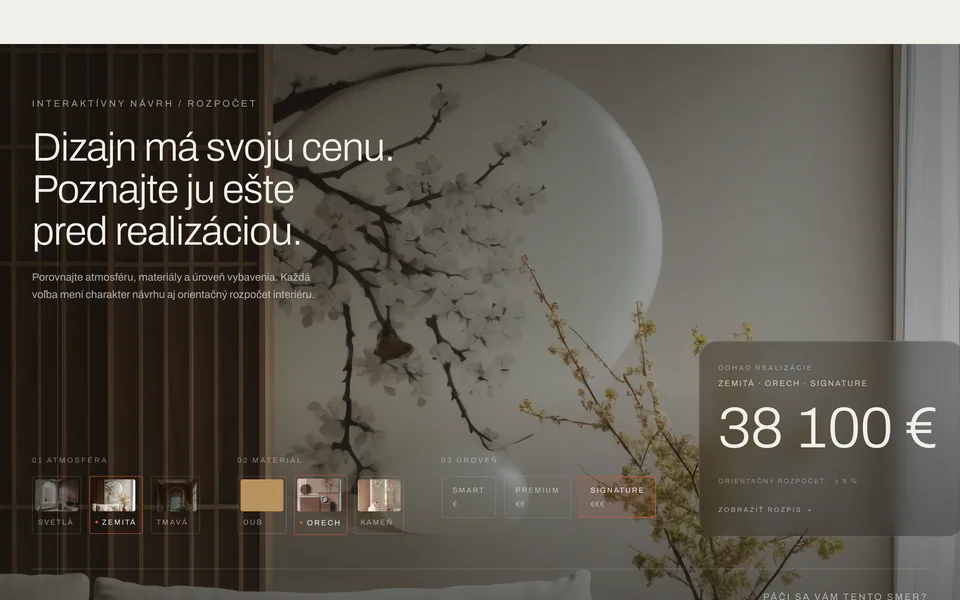
“How much will it cost?” is often the first question, and a fair one. A calculator on the website gives an indicative estimate based on a few choices. A configurator goes further: the customer sees how their choice changes the result, not just the number.
An indicative estimate is not a binding quote, though. A calculator should help the customer decide whether to get in touch and save you conversations based on unrealistic expectations. An exact quote comes only once the brief is understood.
4. Selling gift vouchers
Vouchers are a popular product for salons, studios and restaurants, especially before the holidays. If customers can buy them online and receive them straight away, they do not need to come in or wait for a reply. A simple online shop with card payment and an automatically generated voucher is enough.
5. Connecting enquiries with a CRM or another system
If you copy enquiries into a spreadsheet or CRM by hand, that is a typical candidate for an integration. The form can pass the data straight into the system you already use and create a contact or a task there. It is worth checking in advance whether your system supports such a connection and who will be responsible for the data.
6. Measuring real enquiries
A click on a “Book” button is not yet a booking, and a visit to the price list is not a sale. Useful measurement separates what a visitor tried from what they actually completed: a sent enquiry, a confirmed booking, a paid voucher. Only these numbers show which part of the website works and where people leave.
7. When AI makes sense and when a simple integration is enough
A calculator, automation and artificial intelligence are not the same thing. A calculator works with fixed rules. Automation moves data from one place to another without manual work. AI is useful where free text has to be understood, for example sorting enquiries by content or drafting a reply based on your approved materials.
If a process can be described with clear rules, a simple integration is usually enough. It is cheaper, more predictable and easier to maintain. We consider AI only when rules are not enough.
What it looks like in practice
Two examples from our work. For each we describe the need, the solution and what the user can do today. We do not give figures for time saved or sales growth, because the client measures those, not us.
| Project | Need | Solution created | What users can do today |
|---|---|---|---|
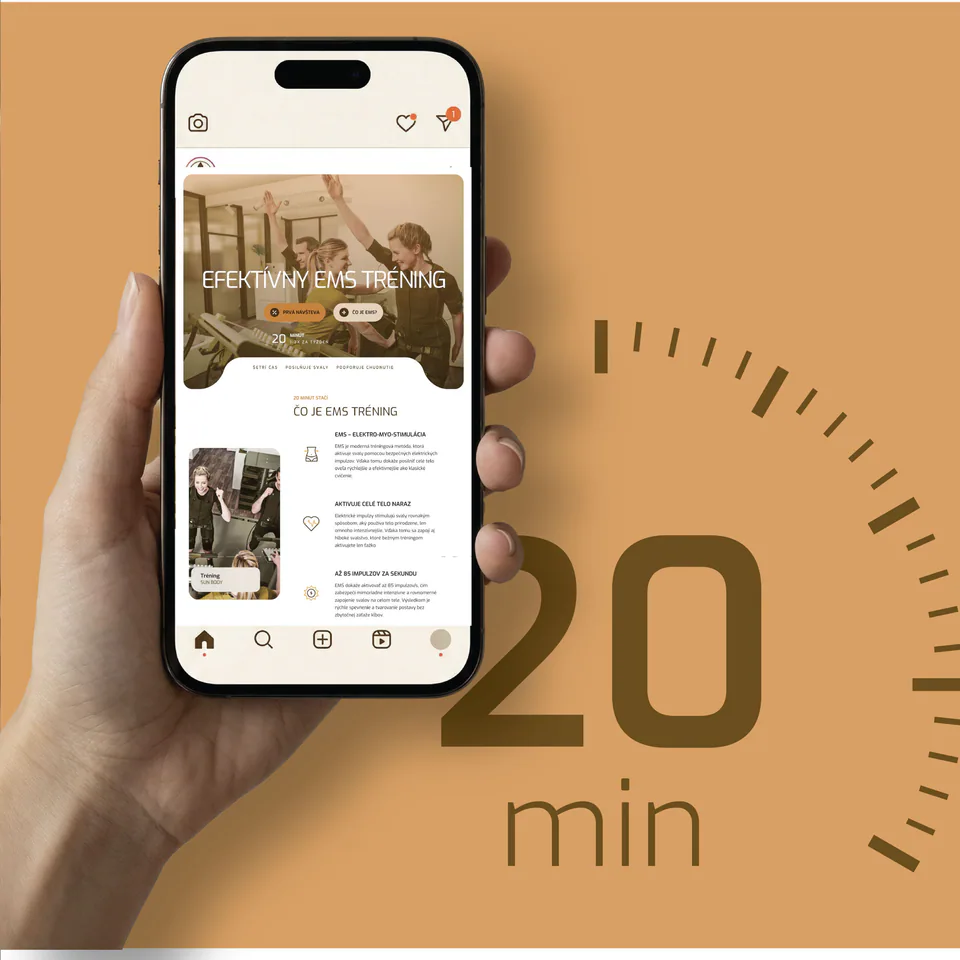
| SunBody | Book a session and buy a gift without calling | A website connected to the Bookio booking system and a mini online shop with digital vouchers | Book a slot through Bookio and buy a voucher online |
| RealitySmart | Show what an interior will look like and roughly what it will cost | An interactive floor plan and a configurator for mood, material and level of finish | Try out a design and see an indicative budget before a consultation. The new version of the website is still in progress. |
A technical possibility does not mean a feature suits every business. The same configurator would be pointless in a salon with five services. That is why we start by asking which step costs you the most time today.
How to choose the first process to simplify
You do not have to automate everything at once. Pick one process and assess it against these criteria:
- Frequency. How often does it repeat? A task that comes ten times a week takes priority over one that comes once a month.
- Time required. How many minutes does one case take, including switching between e-mail, calendar and spreadsheet?
- Error rate. Where do copying mistakes, forgotten replies or double bookings happen?
- Systems in use. Which calendar, CRM, accounting or till system do you already have? The solution should connect to them, not add another one.
- Expected benefit. What improves for the customer and what for you? A faster reply, fewer calls, clearer enquiries.
A process that is frequent, slow and error-prone is usually the best first step. Often it is nothing big: a better form, a connected calendar or a clear price list with a calculator.
What to prepare before the first conversation
- A description of the process as it really happens today, including the exceptions.
- A list of the systems and tools you use, and who has access to them.
- Your customers’ most common questions and the answers you give.
- An idea of what should be different after the change and how you will recognise it.
If you also need a new website, we can design a custom website and the technical solution together. You can see an indicative website price in our price list with a calculator.
Which step do you repeat by hand today?
We will look at whether your website can simplify it. Tell us how the process works today, and we will suggest what is worth automating and what is better left in human hands.
Frequently asked questions
Is a link to a booking system the same as a custom booking system?
No. With a link or an embedded form of an external system, bookings run with the provider. A custom booking system makes sense only with specific rules, for example combining several services, rooms or staff.
Is an indicative calculator on a website a binding quote?
No. A calculator gives an indicative estimate based on a few choices. We prepare an exact quote once we understand the brief.
When do I need AI and when is an integration enough?
If a process can be described with clear rules, a simple integration is usually enough. AI makes sense where free text has to be understood, for example sorting enquiries by content.
More insights
 28 October 2026Opening a salon or studio? What to prepare, from brand to first bookingA practical sequence before opening a salon or studio: offer, name, the logo in real use, photos, a website with booking, Google profile, social media and vouchers. With a checklist.
 1 June 2026AI in business: why most companies fail and how to gain a competitive edgeMany companies implement AI the wrong way. Find out why most AI projects fail, what successful companies do differently and how to use artificial intelligence for real growth.

Next step
Tell us where you want to go. We will plan the route together.
The first consultation is free and without obligation. We go through your goals, and afterwards you receive a proposed solution with an indicative price.